









You know the feeling. A glass of wine with dinner. A beer on the couch. It relaxes you, your eyes close a little faster and you think: nice, I'm going to sleep well tonight.
What happens next is the opposite of what you think.
Alcohol is the most widely used sleep aid in the world, and at the same time one of the most effective ways to wreck your recovery.
Why alcohol helps you fall asleep fast but sleep badly
Alcohol sedates your brain. That's why you fall asleep quickly, but being sedated isn't the same as sleeping. It looks like it, it feels like it, but in the meantime your brain is doing something very different from usual.
Good sleep is made up of different stages. Deep sleep, when your body repairs itself. And REM sleep, when your brain processes, learns and recovers from the day. You need both.
Alcohol throws those stages off.
A review in Alcoholism: Clinical and Experimental Research shows that alcohol, at every dose, clearly delays the first REM sleep of the night. At moderate and high doses, the total share of REM sleep across the whole night goes down. Alcohol also increases deep sleep in the first half of the night. That sounds good, but it's exactly what gives you the false feeling of sleeping well. You drop off fast, feel knocked out and think you're recovering, but in the second half of the night you pay for it with more restlessness and far less restorative REM sleep.
What happens in the middle of the night
While you sleep, your liver breaks down the alcohol. That takes energy, and it makes your nervous system active again.
The result? You get restless. You sweat. You wake up briefly more often without knowing it. Your body tries to make up for the sleep it missed in the first half, but it never fully manages.
You sleep all night, but your recovery takes a big hit.
And then there's your growth hormone
Your body makes growth hormone every night. That hormone repairs your muscles, helps you burn fat and keeps your immune system strong. Most of it is made in the first hours of your sleep.
Alcohol disrupts exactly that window. The peak shifts or drops off. Your body misses its most important recovery moment of the day.
If you work out and then drink, you might think you're giving your body a rest. In reality, you're cutting into what that workout can do for you. Recovery happens at night.
How much is too much?
One drink already has an effect. Two drinks a lot more. Three or more, and most of your recovery is gone that night.
Timing counts too. The later you drink, the bigger the damage. Alcohol early in the evening has less impact than alcohol right before bed.
That doesn't mean you can never drink again, but now you know what you're trading in.
The habit for the next three weeks
Three weeks without alcohol.
It won't be easy. But three weeks is long enough to really feel what changes. How you wake up. How much energy you have. How sharp your head is at ten in the morning.
You don't have to believe it. You just have to test it.
1% better every night.
Guy Veeke
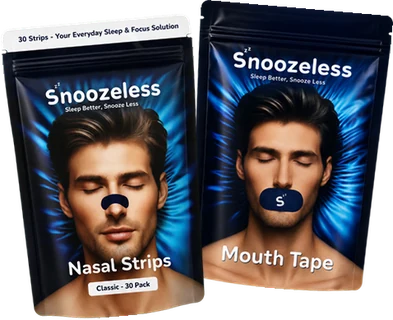
P.S. Working on three weeks of better sleep anyway? Then give your body the chance to really breathe through your nose, too. Mouth breathing disrupts your sleep as well. It keeps your body slightly active when it should be winding down. Our Mouth Tape makes that simple.
Click here to take a look at our Mouth Tape


