











Your eyes are still closed, but your bladder has other plans...
You drag yourself out of bed, stumble half-asleep into the bathroom, do your thing and crawl back in. Ten minutes later you're tossing and turning because you can't fall back asleep.
Sound familiar?
For a lot of people, this is just what nights look like. Getting up once, sometimes twice. They think it comes with the territory. That it's their age. That it's just the way things are.
But that's not true. Peeing at night, also called nocturia, is in most cases not something you just have to live with. It has causes, and those causes are often easier to deal with than you think.
Why you have to pee at night
Normally your body makes less urine at night. A hormone called ADH, short for antidiuretic hormone, tells your kidneys to let less fluid through at night. That way you can sleep without being interrupted.
But that system can get thrown off, and then you make too much urine at night, when you should be sleeping.
What causes it
Drinking too much in the evening is the most obvious one. But it's not just how much you drink, it's also what you drink. Caffeine and alcohol are both diuretics. They make your kidneys produce more urine than normal. A cup of coffee at 4 p.m. or a glass of wine at 9 p.m. can already disrupt your night.
Sleep apnea is a lesser-known but common cause. Every time your breathing stops during sleep, the pressure in your chest rises. Your heart reads that as a sign that there's too much fluid in your body and tells your kidneys to make more urine. That's why people with sleep apnea pee at night a lot more often.
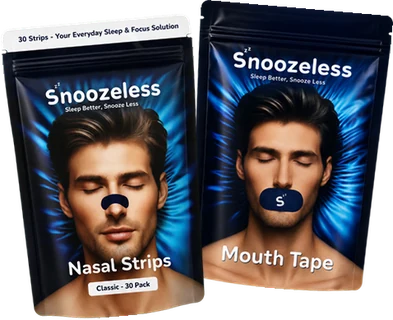
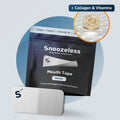
Mouth breathing plays a role too. When you breathe through your mouth, you dry out: your throat, your mouth, your mucous membranes. Your body tries to make up for that by holding on to more fluid during the day, which in turn affects how your kidneys work at night. An easy way to stop mouth breathing while you sleep is mouth tape. You put a strip over your mouth before bed, so you automatically breathe through your nose. You dry out less and your body has less to make up for.
Stress and a high cortisol level disrupt the production of ADH. Your body is in alert mode and, in a way, forgets to switch over to night mode.
What you can do
Stop drinking two hours before bed. Not completely, but consciously less. A lot of fluid right before bed simply gives your bladder too much work.
Avoid caffeine after 2 p.m. Caffeine stays active in your body for six to eight hours and keeps stimulating your kidneys long after you've stopped feeling it.
Go to the bathroom right before bed. Sounds obvious, but a lot of people don't do it every night. An empty bladder at bedtime gives your body the best chance of making it through the night.
Look at your breathing. If you regularly wake up to pee and you also snore or wake up tired, it's worth finding out whether mouth breathing or sleep apnea plays a role.
Your habit for this week
This week, stop drinking two hours before bed and avoid caffeine after 2 p.m. Go to the bathroom every night, right before you get into bed.
Seven days. See how many nights you sleep through without having to get up.
1% better every night.
Guy Veeke
PS. Mouth breathing at night is one of the causes of nighttime peeing that most people overlook. Our mouth tape helps keep your mouth closed, so your body stays better hydrated and your kidneys don't have to work as hard. Check out our mouth tape here: our mouth tape


