










You get up. You grab your phone. You make coffee. You brush your teeth the same way as yesterday, and the day before, and the day before that...
Most of what you do isn't a conscious choice. It's habit. Automatic patterns your brain has stored because they save energy.
Your brain is lazy. Not as an insult, but as a fact. It wants to use as little energy as possible, and habits are how it does that. The more often you do something, the more automatic it gets. The more automatic it gets, the less energy it costs.
That works for good habits, but (sadly) for bad ones too.
What James Clear says in Atomic Habits
James Clear wrote one of the most widely read books on habits: Atomic Habits. The core of his message is simple.
You don't become what you want to become. You become what you do every day.
It's not the big decisions that shape your life. It's the small, everyday things you barely notice. One percent better a day looks like nothing. But after a year, you're 37 times better than where you started.

That goes for exercise. For food. For your relationships and yes, for sleep too.
How a habit works
James describes every habit as a loop of four steps.
First there's a cue. Something that triggers the habit. The alarm goes off, your phone is next to your bed, you see your sneakers by the door.
Then comes the craving. The urge to do something. Scroll, snooze, work out.
Next is the response. What you actually do.
And finally the reward. The feeling you get after you act. That feeling is what your brain remembers. It's the reason you run through the loop again next time.
Want to build a good habit? Then you play with these four steps.
How to build a good habit
Make it easy. The less effort a habit takes, the more likely you are to do it. Want to go to bed earlier? Leave your phone outside the bedroom. Want to get outside for daylight in the morning? Put your shoes by the front door.
Tie it to something you already do. You make coffee every morning. Great. Drink that coffee outside. You brush your teeth every night. Great. Put your phone away right after. New habit, existing moment.
Make it visible. Lay out your sneakers. Put a glass of water on your nightstand. Put a book on your bed. What you see, you do.
Start ridiculously small. Not two hours of exercise if you never work out. Start with 15 minutes. Not eight hours of sleep if you sleep six now. Go to bed thirty minutes earlier. Small enough that you have no excuse not to do it.
Reward yourself right away. Your brain learns from instant rewards. Enjoy how good you feel after those five minutes of moving. Notice how calm you are without your phone before bed. Those small good feelings are what lock the habit in.
A list to choose from
These are habits that directly affect your sleep and your energy. All small. All doable.
- Go outside for daylight within half an hour of getting up.
- Leave your phone outside the bedroom at night.
- Go to bed at the same time every night.
- Drink a glass of water as soon as you get up.
- Take a ten-minute walk after dinner.
- Keep your bedroom cool by keeping the curtains closed during the day.
- No alcohol on weeknights.
- Five minutes of slow, calm breathing before bed.
Your habit for this week
Pick one. Not two, not three. One. (Or come up with your own.)
Do it seven days in a row. Every day. No exceptions.
Only once it feels automatic do you move on to the next one. That's how you build something that lasts. Not better sleep for a week, but for a lifetime.
1% better every night.
Guy Veeke
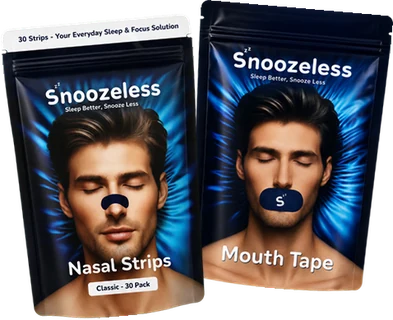
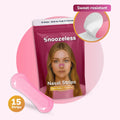
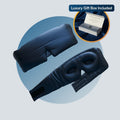
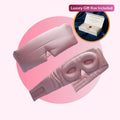
PS. Want to start with the easiest sleep habit there is, one that works from your first night? Keep our mouth tape or Nasal Strips ready on your nightstand. Visible, easy and no excuses. Exactly what Atomic Habits recommends. See the bundle: the Deep Sleep Duo


