



















Everyone looks for the fix for poor sleep at the wrong time of day.
No screens before bed. Go to bed earlier. Unwind a little before you sleep.
All good advice, but most people skip the most important step, and that step happens within the first hour after you wake up.
If you miss that step, the rest barely matters.
How your body clock works
Your body has an internal timing system. A clock that keeps track of when you should be alert, when your hormones peak and when you should sleep.
But that clock needs a reset every day. Without it, it slowly drifts out of sync. You get sleepy at the wrong times, have a harder time falling asleep and don't wake up rested in the morning.
That reset signal is daylight. Straight into your eyes. Within the first hour after you get up.
Deep in your brain are cells that do nothing but keep time. Those cells get information straight from your eyes. As soon as daylight reaches your eyes, they send a signal through your whole body: it's morning. Let's go.
Cortisol rises. Your body temperature goes up. Your metabolism gets going. And your body clock is set again.
Miss that signal? Then your clock falls behind. Your body thinks it's still night while you've long since started your day.
Why this directly affects your sleep that night
This is the part most people don't know.
Morning light doesn't just decide how awake you are during the day. It also decides when your body makes melatonin in the evening. Melatonin, the hormone that makes you sleepy, starts to rise about 12 to 14 hours after your first exposure to daylight.
Think of it as a timer. Daylight at 7 a.m.? Then melatonin starts rising around 9 p.m. Your body gets ready for sleep exactly when you want it to.
No morning light, or too late? Then that timer starts later. You feel more awake in the evening than you'd like, have a harder time falling asleep and wake up tired again the next morning.
Research from the Salk Institute for Biological Studies confirms that daylight in the morning is the strongest outside factor in setting your circadian rhythm, and with it your sleep quality.
Why indoor light doesn't cut it
Most people think switching on the lights does the same thing. It doesn't.
Indoor light averages 100 to 500 lux. Outside on a cloudy morning, you easily get 10,000 lux. On a sunny day, it climbs to 100,000 lux.
Your eyes need that intensity to send the right signal. Indoor light simply isn't strong enough. Even on a gray winter day, the light outside is many times stronger than the best indoor lighting.
Ten to twenty minutes outside is enough. You don't need to stare at the sun. Just be outside, eyes open, looking roughly toward the sun (careful: it should NOT hurt).
What this means for your morning
Grabbing your phone the moment you wake up is the worst thing you can do. Not because social media is bad (although it is), but because you waste the most valuable window of your day.
Those first minutes after you get up are when your body clock is most open to the reset signal. The sooner you're outside, the stronger the effect.
No elaborate routine needed. No hour of meditation or 5K run. Just stand outside. Five minutes beats nothing. The longer, the better.
Your habit for this week
Tomorrow morning, go outside within five minutes of getting up. No phone, no sunglasses. Just stand outside and let the daylight reach your eyes.
Do this seven days in a row and notice when you get sleepy in the evening. Not forced, not from exhaustion, but right when your body tells you it's ready.
That's what a good morning routine does. Nothing more, nothing less.
1% better every night.
Guy Veeke
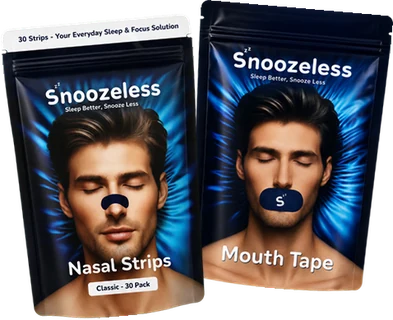
PS. Your morning routine sets the tone for the night. But what happens during that night also depends on how you breathe. People who breathe through their mouth at night sleep more restlessly and recover less well. Our mouth tape keeps your mouth closed during the night, so you breathe through your nose automatically. Check it out here: our mouth tape


