


















The beauty industry is big. Really big. Serums, creams, treatments, supplements. They all promise to make your skin look younger.
But the most effective thing for healthy, youthful skin costs you nothing. You already do it every night. You’re just probably not doing it well enough.
What happens to your skin while you sleep
Your skin is busy at night. While you sleep, your body switches into recovery mode, and your skin does exactly the same.
Growth hormone, released during the first hours of deep sleep, signals your skin cells to renew themselves. Damaged tissue gets repaired. New cells are made. Collagen, the protein that keeps your skin firm and smooth, is produced at night.
During the day, your skin is exposed to sun, pollution, stress and dehydration. Night is when all that damage gets repaired. If you sleep badly or too little, your skin simply doesn’t get enough time to finish the job.
You see the result in the mirror. Bags under your eyes, a dull complexion, drier skin and fine lines that look deeper than yesterday.
What lack of sleep visibly does to your face
You know how it goes. One bad night and everyone asks if you’re feeling okay. That’s not just tiredness showing. A bad night causes real physical changes in your face.
When you’re short on sleep, your blood vessels widen, which makes your eyes red and puffy. Your cortisol goes up, which feeds inflammation in your skin and makes existing problems like acne or eczema worse. And your skin loses moisture faster, because its protective barrier weakens when you don’t sleep enough.
One bad night already shows. Imagine what years of chronic sleep loss do.
Mouth breathing and your skin
This is a link few people know about.
If you breathe through your mouth at night, you dry out. Not just your mouth and throat: your whole body loses moisture faster. Dehydration is one of the biggest enemies of healthy skin. It speeds up wrinkles, makes your skin look duller and slows down recovery.
Breathing through your nose while you sleep keeps your moisture balance in better shape. Your nose filters and humidifies the air you breathe in, your mouth stays closed, and your body holds on to moisture where it’s needed.
What you can do
Sleep at least seven to eight hours. That’s non-negotiable if you want your skin to do its repair work. Get less than six hours and your collagen production drops noticeably.
Sleep on your back if you can. Sleeping on your side presses your face into the pillow, which over time adds to sleep lines and wrinkles on one side of your face.
Keep your bedroom cool and dark. Heat disrupts your sleep and dries out your skin even more. A cool, dark room helps your body reach deep sleep faster, and that’s where the repair work happens.
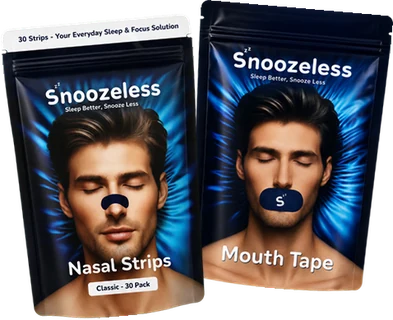
Stop breathing through your mouth while you sleep. Your skin needs moisture to recover, and mouth breathing drains it. Mouth tape keeps your mouth closed, so your body keeps its moisture balance and your skin can recover as well as possible overnight.
This week’s habit
This week, go to bed at the same time for seven days straight and get at least seven and a half hours of sleep. No serum, no cream and no treatment will do more for your skin than that.
1% better every night.
Guy Veeke


