















Most people think a healthy heart beats as regularly as possible. Tick, tick, tick. Always the same.
That's not true.
A healthy heart actually beats irregularly. Not wildly or chaotically, but with small variations between each beat. That variation has a name: heart rate variability, or HRV for short.
And that variation tells you more about how well you're recovering than any other measurement.
What HRV actually is
Imagine your heart beats about once a second. The time between those beats is never exactly the same. One time it's 0.82 seconds, the next 0.79, then 0.84. Those small differences are your HRV.
The bigger that variation, the better. A high HRV means your nervous system is flexible. That your body can switch easily between active and relaxed. That you've recovered and you're ready for the day.
A low HRV means the opposite. Your body is under pressure. From stress, lack of sleep, alcohol or illness. It can't switch gears properly. It's still busy recovering from yesterday.
Why sleep has the biggest effect on your HRV
Your HRV is highest during deep sleep. That's when the part of your nervous system that controls rest and recovery is working hardest.
Sleep badly? Your HRV goes down. Sleep well? It goes up.
It's actually that simple. Your HRV is a direct reflection of how well your body recovered overnight. No supplement, no workout and no hack has as much effect on your HRV as a good night's sleep.
How to measure your HRV
You don't need an expensive device. What matters most is looking at the pattern over time. Look at your average over a week. Notice what changes after a bad night, after alcohol, after a busy day or after a quiet weekend.
That pattern tells you more about your body than a single doctor's visit ever will.
What you can do to improve your HRV
A set bedtime. Your nervous system loves routine. Going to bed at the same time every night is one of the easiest ways to raise your HRV for good.
No alcohol before bed. Alcohol lowers your HRV directly and measurably. Even one glass shows up in your reading the next morning.
Breathe through your nose. This one surprises a lot of people. Breathing through your nose while you sleep puts your body into recovery mode. Mouth breathing does the opposite. It keeps your body slightly active and lowers your HRV all night long.
A cool bedroom. A lower temperature helps your body get into deep sleep faster. And deep sleep is where your HRV is highest.
The habit for this week
Pick one of these actions and, if you have a smartwatch or tracker, start keeping an eye on your HRV. Watch what happens for seven days. You'll see for yourself what works and what doesn't. Your body tells you every morning.
1% better every night.
Guy Veeke
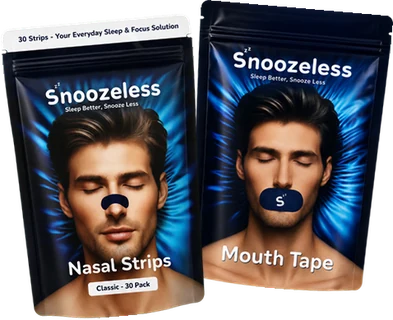
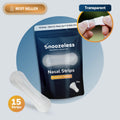
P.S. Breathing through your nose is one of the simplest ways to raise your HRV. But if your nose gets blocked at night, you automatically switch to breathing through your mouth without knowing it. Our Nasal Strips keep your nose open, so your body actually gets into that recovery mode.
Check out our Nasal Strips here


