


















It's 11 p.m. You're in bed. But your mind isn't there yet.
That email you still need to answer. That conversation from this afternoon. Tomorrow's to-do list. It just keeps spinning.
You think you just have a busy mind, but at that moment something is happening in your body that goes far beyond thoughts alone.
You're producing cortisol, and that's the last thing your body needs when it wants to recover.
What cortisol is
Cortisol is your stress hormone. It isn't bad; you need it. Every morning, cortisol helps you wake up, feel sharp and have the energy to take on the day.
But cortisol belongs to the day. Not to the night.
In the evening and at night, cortisol should be low. As low as possible. Because only when cortisol drops can your body switch to recovery. Repairing muscles. Renewing cells. Putting your immune system to work.
Cortisol and recovery don't go together. It's one or the other.
What stress before bed actually does
If you're stressed before bed, your cortisol level stays high. Your nervous system stays in a light state of alertness. Your body thinks something still needs to happen.
That has direct consequences. You sleep less deeply. Your REM sleep gets shorter. You wake up briefly more often without knowing it, and your growth hormone, the hormone that repairs your muscles and keeps your immune system strong, doesn't get the room to do its job.
Your body can't hit the brake and the gas at the same time. Stress is the gas. Sleep is the brake. As long as cortisol is high, the gas wins.
Why you feel it the next morning
You wake up and you're already tired. Not because you slept too little, but because your sleep didn't do what it was supposed to do.
Your head feels foggy. Your body feels heavy. You grab your phone and hope coffee will fix it.
That's no coincidence. That's what happens when cortisol stays too high all night.
What you can do
The answer isn't sleeping more. It's heading into the evening differently.
Your body needs a transition between the rush of the day and the calm of the night. At least an hour. Longer if you can.
No more work after a set time. No quick last look at your email. No finishing that one last task. Your brain reads that as: the day isn't over yet. Cortisol stays high.
Write your thoughts down. Worrying before bed keeps cortisol active. A simple to-do list for tomorrow, on paper, tells your brain it can let go. You don't have to remember it anymore.
Dim your lights. Bright light keeps cortisol high. Warm, soft light helps your body make the switch to night.
Breathe slowly. Long, calm exhales activate your parasympathetic nervous system, the part of your nervous system that lowers cortisol and kicks off recovery. Breathe in for four counts, out for six. Five minutes. That's all you need.
Your habit for this week
Pick a time. Let's say 9 p.m. From that moment on, no more work. No email, no to-do lists, no conversations about tomorrow.
Not because you're lazy, but because your body needs that time to let cortisol drop before you go to bed.
Seven days. See what changes.
1% better every night.
Guy Veeke
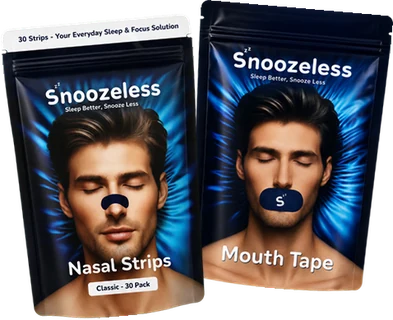
PS. A calm nervous system before bed helps. But if you then breathe through your mouth anyway, your body stays quietly switched on all night. Breathing through your nose lowers your heart rate, calms your nervous system and helps your body really let go. Mouth tape makes that easier.


