
















When you’re tense, you take a deep breath. A big gulp of air, and for a moment you feel better.
That’s the reflex, and it isn’t quite right. Especially not in your sleep, because that’s where your body does something similar without you noticing.
It breathes too much.
Why more air isn’t better
At rest, your blood is almost completely full of oxygen, somewhere between ninety-six and ninety-nine percent saturated. So there’s hardly any room for more, no matter how hard you breathe.
The feeling that you need air comes from something else. Your brain measures how much carbon dioxide is in your blood, and that’s the signal it uses to steer your breathing.
CO2 is more than waste. It’s the key that lets oxygen come loose from your blood and reach your muscles and your brain. Without enough CO2, the oxygen stays in your blood and has a harder time getting where it needs to go.
If you breathe faster than your body needs, you blow off CO2 you could still have used. That’s why you get lightheaded when you hyperventilate, even though your blood is full of oxygen. There’s plenty in stock, but the delivery stalls.
What happens at night
In your sleep, your breathing is supposed to become slow and regular, especially in the deep stages during the first half of the night. That’s the sign your body is in recovery mode.
As soon as your mouth opens, that changes. There’s no resistance anymore, so the air goes through in big gulps and you start breathing faster and shallower, with nothing to hold you back.
Your body does notice. Your heart rate goes up a little, your nervous system gets more alert and you wake up briefly more often without remembering it. That keeps you hanging in the light stages, and you spend less time in the stages that actually do you good.
The clues you’re left with are small. A dry mouth, a sticky throat, a heavy head and sometimes a partner who says they can hear you breathing.
Where the advice goes wrong
Everyone tells you to breathe deeply, and that almost always gets explained as taking in lots of air.
What you want is slow. The volume can stay small, and your exhale can calmly last longer than your inhale. Six seconds out feels like doing nothing, and that’s exactly right.
Stress often plays a part, too. A tense day shifts your breathing into a higher gear, and you take that gear with you to bed.
What you can do about it
Measure it first. Sit down quietly, set a timer for one minute and count your breaths. At rest you should land at twelve to sixteen a minute. If you’re at twenty or more while sitting still, there’s something to gain.
Breathe low instead of high. Put one hand on your belly and one on your chest and see which one moves. If it’s mostly your chest and your shoulders rise with it, you’re breathing like someone who just got startled.
Stretch out your exhale. Four counts in through your nose and six counts out, for a few minutes. That brings your heart rate down, and that’s where you want to be in the evening.
Keep it in your nose. The resistance of your nose is exactly what keeps your breathing slow, and that resistance disappears as soon as your mouth joins in.
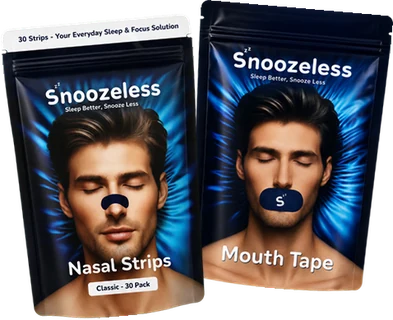
And take care of the night, because that’s when nobody is paying attention. Nasal Strips pull the sides of your nose outward and keep your nasal passage open with a splint, so your nose can deliver enough air. Mouth tape keeps your mouth closed, so your breathing stays slow and regular during the hours you can’t do anything about it yourself.
This week’s habit
Once a day, count your breaths for one minute. Do it at a set time, for example right before you go to sleep.
Then spend two minutes breathing four counts in and six counts out. That’s it, nothing else changes.
After a week, check your number. For most people it drops on its own, just because they’re paying attention to it for a moment :)
1% better every night.
Guy Veeke
PS: Do you breathe calmly during the day and still wake up out of breath?
Then it’s happening in your sleep. The combination of Nasal Strips and mouth tape keeps your nose open and your mouth closed, so your breathing stays low and slow all night long.


