
















Most people think recovery is something you do. Stretching, foam rolling. But real recovery? That happens while you sleep.
Every night, somewhere between falling asleep and waking up, your body throws the doors wide open for one of the most powerful hormones it makes: growth hormone. And that hormone does a lot more than make you taller as a kid. It repairs your muscles, burns fat, fixes tissue and keeps your brain sharp.
The problem is that most people half sabotage this process every night without realizing it.
How it works
Growth hormone is made by your pituitary gland, a small gland in your brain. The biggest peak comes in the first one to two hours of your sleep, during your first stretch of deep sleep.
That timing is crucial. Your body doesn't just pick a random moment in your sleep. It runs on a fixed schedule. Miss that first deep sleep stage (because of a late bedtime, alcohol, stress or poor breathing) and you miss the biggest growth hormone peak of the night right along with it.
Research from the University of Chicago shows that sleep loss has a strong negative effect on your hormones, including the production of growth hormone. This hormone is mostly made during deep sleep, so too little sleep can get in the way of recovery and physical development.
What growth hormone actually does
Your muscles don't repair themselves during the day while you train. They repair at night, driven by growth hormone. So if you train hard and sleep badly, you're throwing away a big part of your work. The gains are made at night.
But it goes beyond sports. Growth hormone also helps regulate your fat burning, your immune system, your skin and your mental recovery. It's the hormone your body uses to repair the damage of the day. Every single day.
Without enough deep sleep, that damage builds up. Not dramatically from one day to the next, but slowly, quietly. Until one morning you wake up and can't remember the last time you felt truly rested.
What actually improves your recovery
A consistent bedtime. Your growth hormone peak follows your circadian rhythm. Going to bed at a different time every night throws that rhythm off. Pick a set time and stick to it on weekends too.
No alcohol before bed. Alcohol directly suppresses deep sleep. One or two glasses of wine can already shorten your first deep sleep stage significantly. Exactly the stage where your growth hormone works hardest.
Sleep cool. Your body temperature has to drop for you to go into deep sleep. A cool bedroom, between 16 and 19°C, helps that process. The faster your body temperature drops, the faster you get into deep sleep.
Breathe through your nose. This is the one most people completely overlook. Mouth breathing during sleep speeds up your breathing and keeps your nervous system slightly switched on. That's the exact opposite of what you need for deep sleep. Nasal breathing slows your breathing, lowers your heart rate and puts your body into the state of rest it needs to reach those deep sleep stages.
The habit for this week
Pick one thing from the list above and do it consistently for seven days. Not all four at once. One.
The best one to start with? Pick a set bedtime and stick to it for seven days. No exceptions on the weekend. No “back to normal tomorrow.” Just the same time, seven days in a row.
Notice what changes.
1% better every night.
Guy Veeke
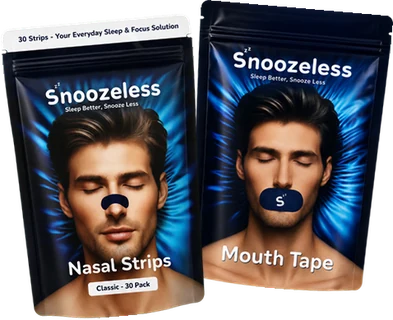
P.S. Breathing through your nose is one of the fastest ways to improve your deep sleep. But if your nose gets blocked at night, that doesn't happen on its own. Our Nasal Strips keep your nasal passages open, so your body actually reaches those deep, restorative stages of sleep.


