



















Look at a skull from 10,000 years ago. Straight teeth. A wide jaw. Room for every molar.
Now look at a modern human. Jaws that have gotten narrower. Crooked teeth. Wisdom teeth that get pulled because there's simply no room left for them. These days almost everyone has either had braces or has teeth that aren't straight.
That's no coincidence. It's evolution that couldn't keep up with what we started doing to our food.
What changed
Our ancestors chewed hard. Raw meat, hard nuts, tough roots. A meal didn't take ten minutes to eat, it took hours of chewing. That constant chewing pressure drove the growth of the jaw. Wide jaws, straight teeth, strong muscles around the face.
Once we learned to cook, that changed. Food got softer. Easier to eat. Less chewing needed, and slowly, over generations, our jaws got narrower.
Over the last few centuries that process has only sped up. Processed food, bread, pasta, soft snacks. The average modern person chews a fraction of what their ancestors did, and our jaws and teeth are paying the price.
What this has to do with mouth breathing
A narrower jaw means less room in your mouth, and less room in your mouth means your tongue, which normally rests against the roof of your mouth, drops down. The floor of your mouth becomes your tongue's resting place instead of your palate.
That directly affects how you breathe. A tongue that sits low in your mouth pushes your lower jaw forward and your lips apart. Your mouth falls open more easily. Especially while you sleep, when your muscles are completely relaxed.
And that's how mouth breathing becomes a habit. Not because your nose is blocked, but because the shape of your mouth and jaw makes breathing through your mouth easier than breathing through your nose.
What mouth breathing does to your teeth and jaw
Saliva is your teeth's natural protection. It neutralizes acids, washes away bacteria and protects your enamel. When you breathe through your mouth, your mouth dries out. Less saliva means less protection.
The result is more tooth decay, more gum problems and a dry, sticky mouth when you wake up in the morning. That dry mouth isn't just a harmless annoyance. It's a sign your mouth went without protection all night.
And there's more. Mouth breathing changes the pressure inside your mouth. Your tongue doesn't rest against your palate, so your palate gets narrower instead of wider. In children, this directly affects how the face develops. In adults, it makes existing jaw and airway problems worse.

The difference is bigger than most people think. A lifetime of mouth breathing literally leaves its mark on your face.
What you can do
Chewing more is serious advice. Go for food that pushes back a little more often. Raw vegetables, nuts, tougher cuts of meat. Your jaw muscles are muscles, and they respond to training.
Check your tongue position during the day. The tip of your tongue should rest against the roof of your mouth, just behind your front teeth. Not against your bottom teeth, not on the floor of your mouth. That's the natural position, and it helps keep your jaw where it belongs.
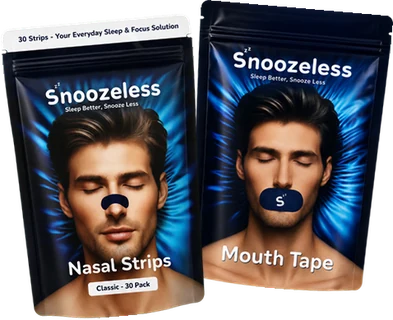
Stop breathing through your mouth while you sleep. That's when most of the damage happens. Your muscles are completely relaxed, your mouth drops open and you breathe through your mouth all night without knowing it. Mouth tape keeps your mouth closed, so you automatically breathe through your nose, your saliva stays where it should and your teeth and jaw get the protection they need.
But mouth breathing doesn't always stop when you wake up. A lot of people also breathe through their mouth during the day without noticing, especially when they're stressed or concentrating. If your nose doesn't let enough air through during the day, you can use Nasal Strips to keep your nasal passages extra open. That makes nasal breathing easier and helps you break the mouth breathing habit during the day too.
Your habit for this week
This week, pay attention to your tongue position during the day. Is your tongue sitting low in your mouth while you're just sitting or working? Lift it up to your palate. Do this every time you think of it.
And at night? Put on a strip of mouth tape before you go to sleep. One week. Notice how your mouth feels when you wake up. Less dry, less sticky, fresher.
Two small things. A huge impact in the long run.
1% better every night.
Guy Veeke


