

















You’re in bed by 11:30. Tired enough, you haven’t done anything crazy, the screens are off and the curtains are closed.
And yet it takes forty-five minutes before you drift off. Or you fall asleep just fine, but wake up the next morning feeling like something’s missing.
There’s a good chance it’s that cup of coffee you had at three in the afternoon.
How getting sleepy actually works
From the moment you wake up, a substance called adenosine builds up in your brain. The longer you’re awake, the more of it there is, and the more of it there is, the sleepier you get.
That’s your sleep pressure. Think of it as a glass that slowly fills up throughout the day, and by evening it’s full enough to send you off to sleep. While you sleep, your body clears the adenosine away again, so you start each morning with an empty glass.
That’s how it’s supposed to work.
What caffeine does to that
Caffeine is close enough in shape to adenosine to fit into exactly the same spots in your brain. It settles in and blocks the spot.
Blocks is the key word. Caffeine doesn’t remove the adenosine, it just stops you from feeling it. Meanwhile the glass keeps filling up, you just can’t see the level rising.
And as soon as the caffeine wears off, everything that built up in the meantime hits you at once. That’s exactly that moment around five o’clock when you suddenly feel completely drained.
Why three in the afternoon is too late
Your body needs roughly five to six hours to break down half of the caffeine. Half, not all of it.
Drink a cup of coffee at three, and around nine in the evening there’s still half a cup in your system. Go to sleep at 11:30, and there’s still a fair amount left.
That pace varies a lot from person to person, by the way. Some people break down caffeine twice as fast as others, and that’s largely genetic. That’s why your coworker can drink an espresso at eight in the evening and sleep like a baby, while one cappuccino after lunch already throws you off.
Here’s the most annoying part. You usually fall asleep just fine, so you think it doesn’t affect you. What you don’t notice is that your deep sleep gets shorter and that you briefly wake up more often without realizing it. You sleep the same number of hours, they just give you less.
Then you wake up tired, drink a bit more coffee in the morning to make up for it, and a day later you’re right back in the same spot.
What you can do about it
Have your last coffee around midday. Around noon, 2 p.m. at the latest. That way most of it is gone by the time you go to sleep.
Also look at what you don’t think of as coffee. Black and green tea, cola, energy drinks, pre-workout and dark chocolate all contain caffeine. An 80% bar after dinner counts too.
Test it on yourself instead of just following a rule. Move your last cup to noon for a week and see what happens. If you notice nothing, you’re one of the fast breakers-down and you can have a cup later in the day without a problem.
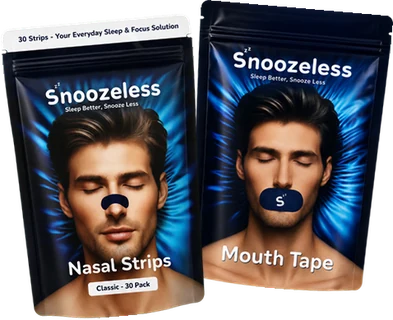
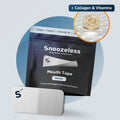
And if your coffee is sorted but you still wake up tired, the problem is the quality of your night. Mouth breathing does something very similar to caffeine: it makes your night lighter without waking you up. When you breathe through your mouth at night, your heart rate goes up a little, so you don’t fully reach those deep stages of sleep. Mouth tape keeps your mouth closed and Nasal Strips keep your nasal passage open with a small splint, so your body keeps breathing through your nose.
This week’s habit
Your last coffee at noon. Seven days. Everything else about your day stays the same.
Set a reminder on your phone if you’re worried you’ll forget, because most people pour that afternoon coffee on autopilot. Me too :)
After a week, notice how quickly you fall asleep and how you feel in that first hour after you get up. Those are the two things that change first. Still just as tired? Then at least you know it’s not the coffee, and you can take a closer look at what you eat in the evening.
1% better every night.
Guy Veeke
PS: Coffee earlier in the day and still waking up tired?
Then it might be how you breathe. Nasal Strips and mouth tape together keep your nose open and your mouth closed, so your hours of sleep actually pay off.


