











You go to bed at eleven. You sleep straight through, never wake up, and get your full eight hours.
And yet you wake up as if you’d spent half the night tossing and turning. Dry mouth, heavy head, that feeling you need an hour before you’re good for anything.
Most people then look at the hours. Go to bed earlier, stay in bed longer, sleep in on the weekend. But the hours were never the problem. It’s about what your body was doing during those hours.
And that starts with how you lie.
What happens as soon as you lie on your back
On your back, gravity pulls everything straight down. Your lower jaw slides back a little. Your tongue, which during the day should rest neatly against the roof of your mouth, drops back toward your throat.
During the day you don’t notice any of this, because your muscles keep everything in place. In your sleep, those muscles relax completely. That’s normal, but it also means nothing is stopping your tongue and soft palate from sinking back.
That makes your airway narrower. Not closed, just narrower, and a narrower airway means your body has to work harder for the same amount of air.
Often your body fixes this by opening your mouth. More space, less resistance, problem solved (or so your body thinks).
But it isn’t. From that moment on, you breathe through your mouth for the rest of the night. Your mouth dries out, your throat gets irritated and your breathing gets shallower. You’re asleep, but you recover less.
That’s why you can clock eight hours and still feel nothing of it the next morning.
Why you don’t notice it yourself
This is the annoying part. You simply sleep right through it.
A narrower airway doesn’t wake you up. Your body makes hundreds of tiny corrections every night, and they’re too short for you to notice. You only feel the result.
That’s why most people blame something else. A busy job, stress, getting older, a mattress that needs replacing.
The clues you’re left with are small. A dry mouth when you wake up. A sticky feeling in your throat. The sense that sleep doesn’t give you what it used to.
What you can do about it
Sleep on your side. This is the big one. On your side, your lower jaw stays in place and your tongue doesn’t drop back, because gravity now pulls sideways instead of down. Your airway stays wider without you having to do anything.
Left or right makes little difference to your breathing.
Put a pillow behind your back. Almost everyone who falls asleep on their side rolls onto their back at some point anyway. A firm pillow or a rolled-up blanket behind your back keeps you in place without waking you up.

Pick a pillow that fits your position. On your side you need a thicker pillow than on your back, because there’s more distance between your shoulder and your head. If your neck is bent at an angle, you tense exactly the muscles that are supposed to relax.
Raise the head of your bed a few centimeters. It takes pressure off your airway and also helps if your nose tends to get blocked at night.
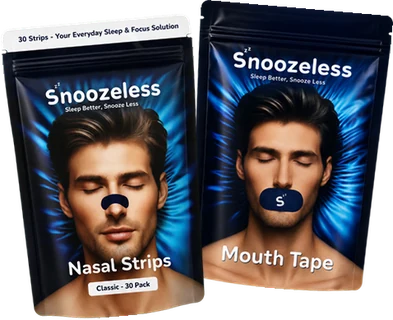
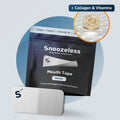
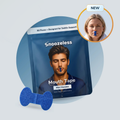
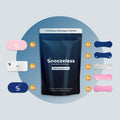
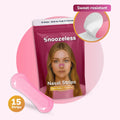
And make sure your nose can keep up. Sleeping on your side only helps if you can actually breathe through your nose. If your nose is often blocked at night, you’ll automatically switch back to your mouth. Nasal Strips gently pull the sides of your nose outward and keep your nasal passage open with a small splint that holds everything under gentle tension. Mouth tape keeps your mouth closed, even if you end up on your back halfway through the night.
This week’s habit
Starting tonight, sleep on your side and put a pillow behind your back or between your knees so you don’t roll back. No need to buy a new mattress, that’s a waste of money :)
After a week, pay attention to one thing. How does your mouth feel when you wake up? Dry and sticky means you were still breathing through your mouth. Normal and fresh means something has changed.
1% better every night.
Guy Veeke
PS: Still rolling onto your back every night?
Then Nasal Strips and mouth tape together are the easiest fix. Your nose stays open, your mouth stays closed, and your sleeping position matters a lot less.


