












You’re in bed with a completely blocked nose. Two sprays, and within a minute you can breathe again.
The next evening you reach for it again, because it worked. And the evening after that, too.
Somewhere around day three something flips, and from that moment on the bottle is working against you.
What that spray actually does
Inside your nose there’s swell tissue that can fill up with blood. When it fills up, your nasal passage gets narrower, and that’s exactly what happens at night as soon as you lie down.
The active ingredient in most sprays squeezes the blood vessels in that tissue shut. The blood drains out, the tissue shrinks and you have room.
That’s all it does, too. It makes room and leaves the cause of the swelling alone, whether that’s a cold, dust mites or dry air.
Why day three is the tipping point
The lining of your nose gets used to that substance. The spots it acts on become less sensitive, so you need more for the same effect, and it wears off sooner.
The nasty part is the moment the spray wears off. The blood vessels that were squeezed shut for hours then open up wider than they were before your first spray, and your nose is more blocked than when you started.
So you spray again. That works again, and the rebound after it is a bit harder again. It’s called rebound congestion, and it’s one of the most often missed causes of a nose that stays blocked for months.
The package insert says seven days. Keep it to five days in a row at most and you’re on the safe side.
How to tell you’re hooked
You use it every evening by default, even without a cold. Without a spray you’re blocked within an hour, and with one you get through another half a night.
Your nose feels dry or burning, and sometimes it bleeds a little. You go through more than one bottle a month, and there’s always one in your coat pocket.
At that point your blocked nose isn’t coming from your cold anymore, because that was over long ago.
Why quitting fails so often
Everyone who tries runs into the same thing. The first night without spray you can’t get any air, so at three in the morning you reach for the bottle after all and you’re back to square one.
That’s because you’re taking something away without putting anything in its place. In those first nights you simply need room in your nose, and that room has to come from somewhere.
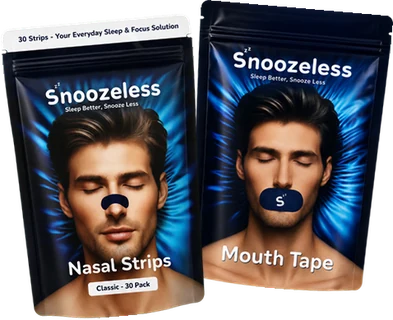
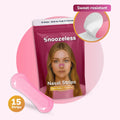
That’s exactly what a nasal strip does. Nasal Strips lift the sides of your nose from the outside and keep your nasal passage open with a splint that holds everything under gentle tension. No active ingredient is involved, so the lining of your nose can’t get used to it and there’s no rebound. The strip widens the opening from the outside while the lining on the inside gets a chance to calm down.
How to quit
Start wearing the strip and keep the spray around for now. One night to notice how much air the strip gives you, so you know what you can build on.
Then stop on one side. From the next day on, no more spray in your left nostril, and keep using it on the right for now. That way you always have one side that’s sure to work, plus the strip making room on both sides, and together that’s enough to get through the first few nights.
Once the left side has settled down after a week, stop on the right as well. Keep using the strip for as long as you need it. Count on two weeks for the whole process.
Keep a saline spray next to your bed for the nights it feels rough. It rinses and moisturizes and there’s nothing in it you can get used to, so you can use it as often as you like.
See your doctor or pharmacist if you’ve been doing this for months. There are sprays with an anti-inflammatory that your doctor can add to help you get through quitting, and that saves you a lot of misery.
Meanwhile, tackle the cause. Air out your bedroom, keep the air humid enough during heating season and raise the head of your bed a few centimeters. A nose that’s often blocked almost always has more than one reason.
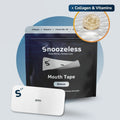
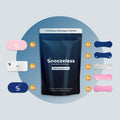
Once you’re off the spray and your mouth still falls open at night, mouth tape is the next step. Your nose does the work again and your mouth doesn’t have to step in.
This week’s habit
Take the spray off your nightstand. Put the saline spray where it used to be.
Strip on before you get into bed, and from the next day on, one nostril without spray. The first evening it feels like a gamble, and after three nights you notice it simply works :)
Pay attention to your mornings. For most people the first week is a bit bumpy, and after that your nose does it on its own more and more often.
1% better every night.
Guy Veeke
PS: Want room in your nose from your first night, before you start quitting?
Then this is the easiest place to start. The combination of Nasal Strips and mouth tape keeps your nose open and your mouth closed, with nothing in it you can get used to.


