




















Your mouth and your nose both lead into your throat, and from there one road runs down to your lungs.
So it shouldn’t make any difference to your lungs which of the two you use. Same air, same destination.
Except that along the way, your nose adds something to that air that your mouth can’t make.
What happens in your sinuses
Around your nose there are hollow spaces in your skull, above your eyebrows and behind your cheeks. The cells lining those spaces make a gas called nitric oxide all day long.
It’s a tiny molecule of one nitrogen atom and one oxygen atom, and it’s one of the substances your body uses to widen and narrow its blood vessels.
When you breathe in through your nose, you pull that gas down with you. It travels with the air into your lungs, where it opens up the blood vessels around your air sacs a little more. That means more blood flows past the spot where oxygen gets picked up.
On the way, it also works mildly against bacteria and viruses in the air you breathe in. So your nose delivers cleaner air than it takes in.
What your mouth doesn’t do
Breathing through your mouth delivers the same air to the same lungs, just without that boost along the way.
And you lose more than that. Your nose warms the air to almost body temperature and moistens it, so your airways don’t dry out. It filters out dust and pollen in its mucus and tiny hairs. It also adds resistance, so you breathe slower and deeper than when the road is wide open.
Your mouth does none of those four things. Cold, dry, unfiltered air goes straight through, and you breathe faster and shallower.
Why it matters most at night
During the day you mostly breathe through your nose without thinking about it. When you sleep, your muscles relax, your mouth falls open as soon as your nose gets even a little in the way, and how you lie determines how fast that happens.
Do the math. At rest you breathe about thirteen times a minute, so in an eight-hour night you take six thousand breaths. That’s six thousand times it matters which route the air takes.
That’s why you wake up with a dry mouth and a sticky throat. Those same hours of breathing through your nose would have given your lungs warm, moist air with that gas added.
What you can do about it
Practice during the day. Once a day, walk for twenty minutes with your mouth closed, on the way to the grocery store or during a phone call. It feels awkward the first few days, and after that it doesn’t.
Check whether your nose can handle it. A nose that already feels tight during the day closes up completely at night, and then you automatically fall back to your mouth.
If dust or pollen bothers you, rinse your nose with salt water before bed. That takes away the irritation that makes the swelling bigger than it needs to be.
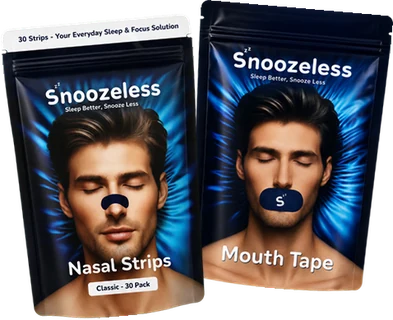
And keep it open at night. One side of your nose is always half closed, so the margin is smaller than you think. Nasal Strips pull the sides of your nose outward and keep your nasal passage open with a splint. Mouth tape keeps your mouth closed, so your body keeps using your nose once your muscles relax.
This week’s habit
One walk a day with your mouth closed. Twenty minutes, and nothing else about your day changes.
If you notice your mouth opening halfway through, you’re going too fast. Slow down a little and you’ll notice it works again right away.
After a week, pay attention to your throat when you wake up. That’s where you’ll feel it first.
1% better every night.
Guy Veeke
PS: Is breathing through your nose easy during the day, but you still wake up with a dry mouth?
Then your mouth falls open once you’re asleep. The combination of Nasal Strips and mouth tape keeps your nose open and your mouth closed, right in the hours when you can’t do anything about it yourself.


