
















You get home at 7:30, grab a quick bite, and by nine you’re at the gym. It’s the only time of day it fits.
By 11:30 you’re in bed. You’re wiped out, so you’re asleep within ten minutes, and yet you wake up the next morning as if you hadn’t caught up on anything.
That’s because falling asleep and recovering are two different things.
What a workout does to your body
Exercise is a stressor, and that’s exactly why it works. Your body releases adrenaline, your heart rate goes up, your blood pressure rises and your core temperature climbs.
That doesn’t stop the moment you finish your last set. Your nervous system is still in go mode, and it takes a few hours before it shifts back into recovery mode.
While that’s going on, your resting heart rate stays higher than normal, and so does your core temperature. Everything keeps running at workout pace for a while.
Why that affects your night
To fall asleep, your core temperature has to drop, and to sleep deeply, your heart rate has to come down. Those are exactly the two things that haven’t happened yet after a late workout.
You do fall asleep, because you’re simply tired. What you miss is the deep sleep in the first half of the night, and that’s exactly the part where your muscles and hormones recover.
If you track your heart rate variability (HRV), you’ll see it. A lower HRV and a higher resting heart rate at night belong to a body that’s still cooling down from the day.
So you got the training stimulus but skipped the adaptation. You get stronger in bed, not in the gym.
What makes the difference
It comes down to the type of workout and what you do afterward.
Intervals, heavy lifting close to your limit and competitive sports keep you wired the longest. An easy run or a bike ride at a pace where you can still chat is a completely different story, and for many people those are fine at nine in the evening.
What happens afterward matters just as much. Bright lights in the gym and locker room, your phone on the couch, a big meal at eleven, and the caffeine in your pre-workout, which takes five to six hours to break down by half. Stack all that up and your workout is no longer the biggest problem.
What you can do about it
Leave three hours between your last hard effort and the moment you lie down. For most people that’s enough to get their heart rate and temperature back down.
If that doesn’t fit your week, move the hard sessions to the morning or the weekend and do the lighter work in the evening. Technique, mobility, easy cardio.
Ease out of your workout instead of stopping cold. Ten minutes of easy jogging or cycling brings your heart rate down a good deal before you even leave.
Skip the pre-workout after about 4 p.m. Have some water and a bite to eat instead, and you’ll get through your session just as well.
After that, dim every light you can and keep your phone out of your bedroom.
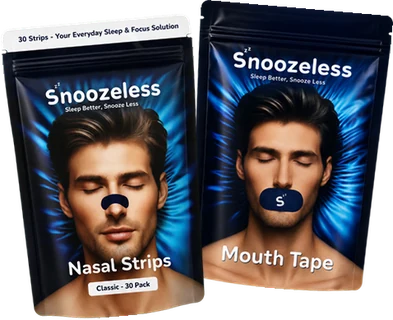
And pay attention to your breathing at night. Your heart rate is already higher after a late workout, so anything that pushes it up further counts double. When you breathe through your mouth at night, your heart rate goes up a little too, so you sink less deeply into sleep. Mouth tape keeps your mouth closed and Nasal Strips keep your nasal passage open with a small splint, so your body keeps breathing through your nose.
This week’s habit
This week, move one workout. The hardest session of your week goes to the morning, or to a time with at least three hours after it.
Leave the rest of your schedule as it is.
Then pay attention to how you feel in the first hour after you get up. If you sleep with a tracker, look at your resting heart rate in the first half of the night. That’s the number that moves first.
1% better every night.
Guy Veeke
PS: Working out early enough and still waking up tired?
Then it might be how you breathe. Nasal Strips and mouth tape together keep your nose open and your mouth closed, so your night actually gives you the recovery you need.


