


















Try this with me. Press your left nostril closed and breathe in. Then do the same on the right.
One side is easier. Almost always. And that’s not because something is wrong with your nose.
You never breathe through both nostrils equally. There’s always one doing the work and one running at half power. A few hours later they swap, without you noticing a thing.
That’s called the nasal cycle, and it explains a lot about how your nights go.
What happens inside your nose
Your nose contains swell tissue: tissue that can fill up with blood and swell. When it swells, the nasal passage on that side gets narrower.
Your autonomic nervous system controls this, and it takes turns. Left swollen, right open. A few hours later, the other way around. The most common explanation is that this lets the lining of each side rest and get moist again in turn, instead of both sides drying out in the airflow all day.
During the day you don’t notice, because the open side has plenty of room to handle everything. Add both sides together and it just feels like normal breathing.
Why you notice it at night
As soon as you lie down, the math changes. More blood flows to your head, so the lining of your nose already swells a bit. The side that was resting anyway goes from half closed to fully closed.
Then gravity joins in. If you lie on your side, blood sinks to the lower side of your head. The lower nostril swells, and the upper one opens up further.
That’s why you can wake up at three in the morning with one nostril completely blocked, roll over, and twenty minutes later have exactly the same thing on the other side.
Nothing is broken. Your nose is doing what it’s supposed to do. You only notice it now because there’s no margin left.

When it does become a problem
As long as the open side lets enough air through, you barely notice. It only gets annoying once that margin disappears.
Dry air, dust mites, a glass of wine before bed, or a nasal passage that’s naturally a bit narrow. Each of these makes the lining of your nose swell even more. Add the nasal cycle on top, and the resting side closes off completely, leaving one nostril to do all the work on its own.
That’s the moment your body decides to open your mouth. More space, less resistance, and from then on you breathe through your mouth for the rest of the night, waking up with a dry throat and a sticky feeling.
What you can do about it
You don’t need to fight the cycle itself. It’s part of how your nose works. What does help is making sure there’s enough margin left.
Roll over when you wake up with a blocked nose. Sounds simple, but it often works within a few minutes, because the upper nostril opens up by itself. It also helps to raise the head of your bed a little, so less blood pools in the lining of your nose.
Keep the air in your bedroom humid enough. Dry air irritates the lining of your nose, and it reacts by swelling even more. In winter, with the heating on, this is the biggest difference you can make.
Rinse your nose with salt water before bed. It clears out dust and allergens that make the swelling worse than it needs to be.
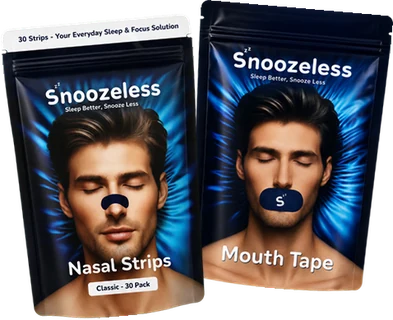
And widen the opening itself. Nasal Strips gently pull the sides of your nose outward with a small splint that keeps everything under gentle tension, on both sides at once. The resting side gets more room than it would have on its own, and that’s exactly the margin you need at night. Mouth tape keeps your mouth closed, so your body doesn’t switch over halfway through the night after all.
This week’s habit
A few times a day, check which nostril is open. Press one closed, breathe in, then do the other. Do it when you get up, around noon and right before bed.
Within a day you’ll feel the switch. And once you know it, you’ll understand right away what’s going on when you wake up at night with a nose that only works on one side.
1% better every night.
Guy Veeke
PS: Does the blocked side really close off completely at night?
Then Nasal Strips and mouth tape together are the simplest way through it. The strips keep both nasal passages open, and the tape makes sure your mouth doesn’t become the way out.


